守護瀕危草鴞、石虎、穿山甲
Protecting endangered Eastern grass-owls, Leopard cats, and Pangolins
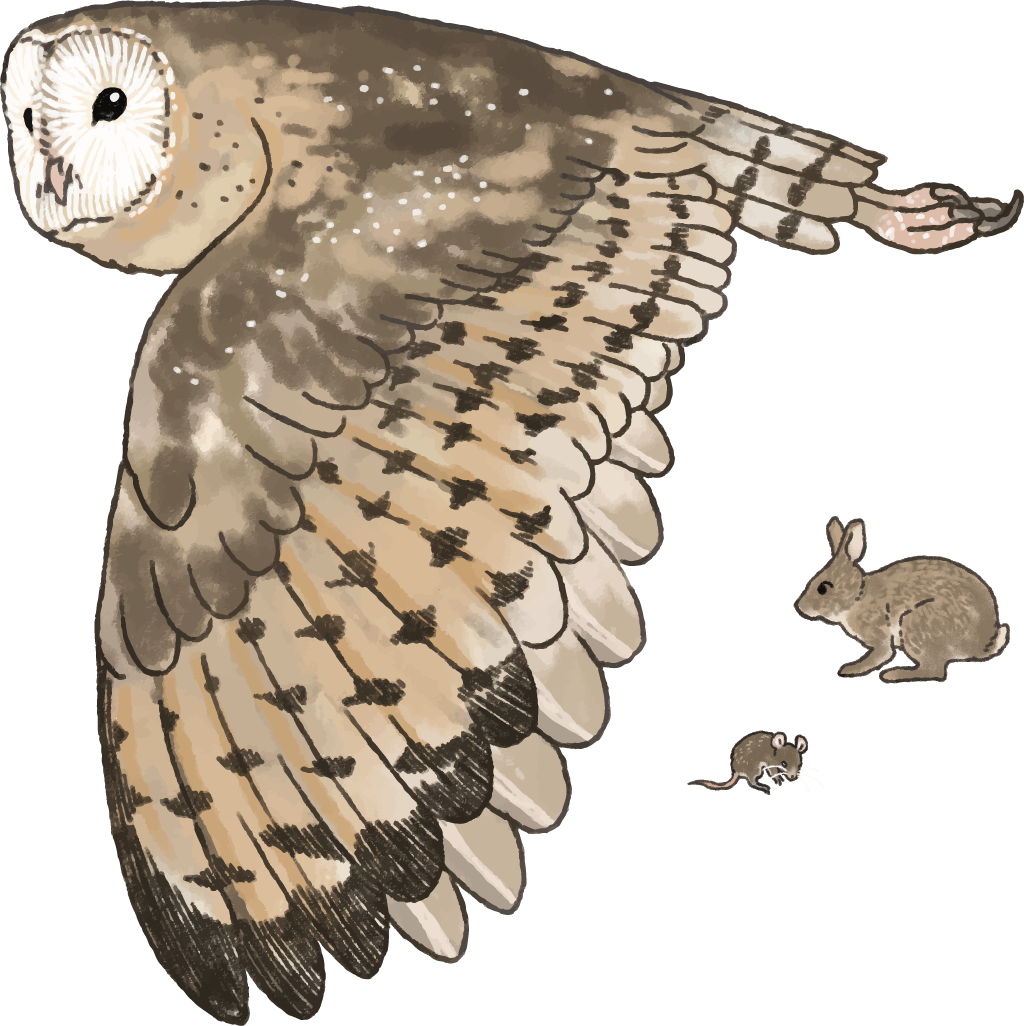
草鴞
台灣特有種
瀕臨滅絕的一級保育類野生動物,
全台數量估計僅存約500隻。
瀕臨滅絕的一級保育類野生動物,
全台數量估計僅存約500隻。
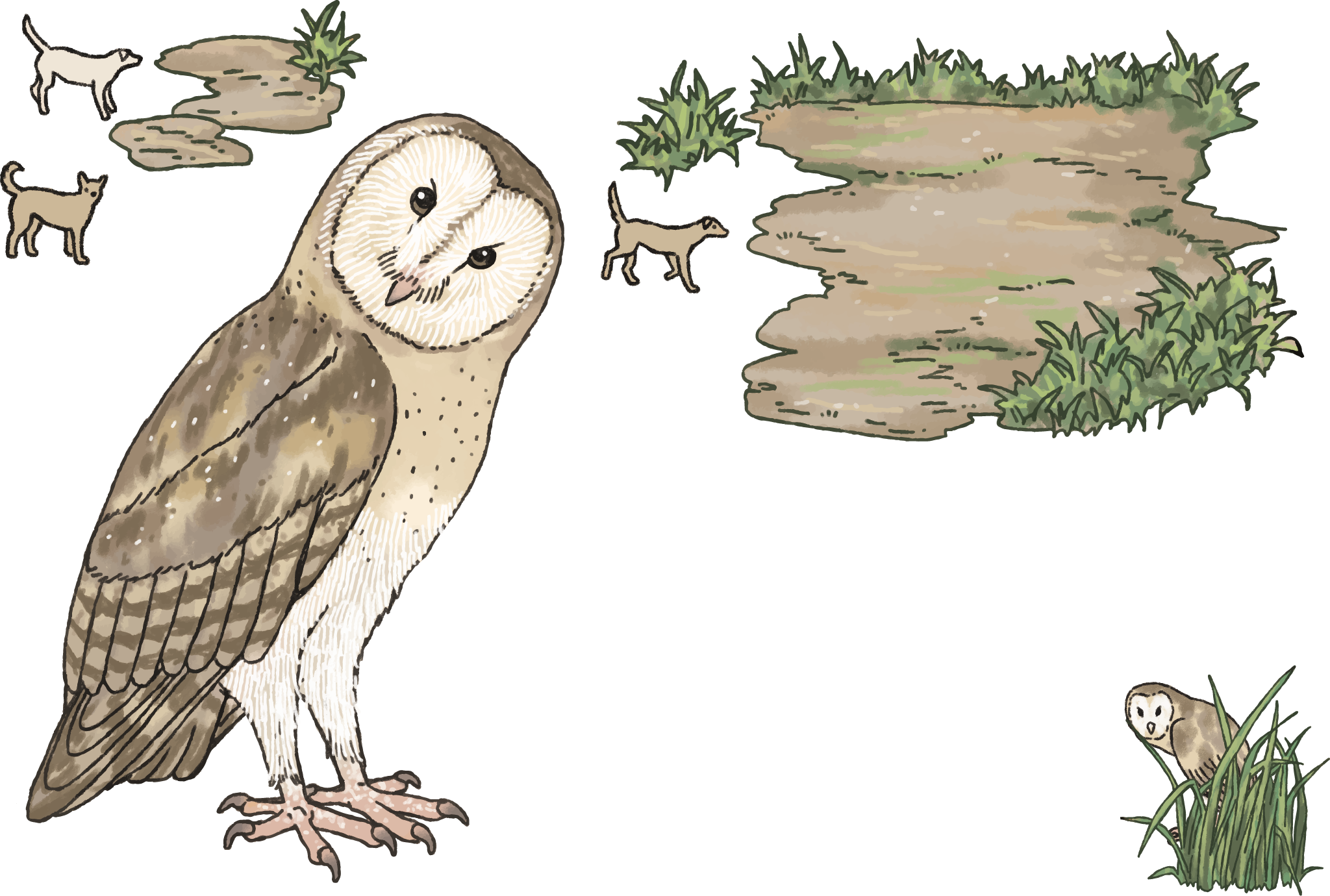
Eastern Grass-owl, Taiwan's endemic subspecies, is a first-level endangered protected species with an estimated population of only around 500 individuals in Taiwan.
草鴞 Eastern Grass-owl
(Tyto longimembris)
|
俗名
|
草鴞、猴面鷹
|
|
特徵
Characteristics
|
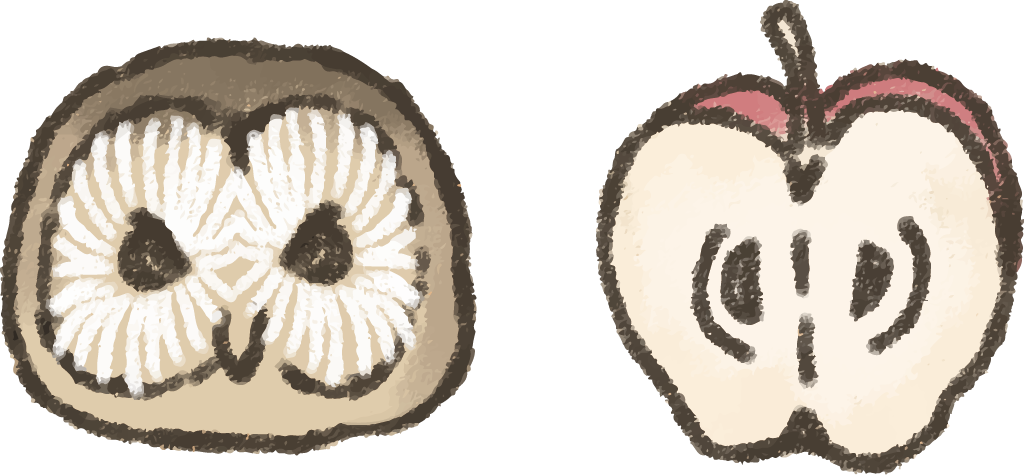
臉盤灰白色、扁又平,像極了蘋果剖面。沒有角羽。頭頂跟背部為褐色,並滿佈小白點。
The Eastern Grass-Owl has a grayish-white facial disc resem bling the cross-section of an apple. Its head and back are dark brown, covered with small white spots, and it has no ear tufts.
|
|
食性
Diet
|
捕捉草生地的鼠類為主,其他菜色包含野兔、兩棲爬行類、昆蟲、鳥類及蝙蝠等。
Mainly preys on rodents from grasslands, but also eats rabbits, amphibians, reptiles, insects, birds, and bats.
|
|
棲地
Habitat
|
住在臺灣海拔500公尺以下的濃密草生地,以臺灣西南部平原為主。
Inhabits dense grasslands below 500 meters in altitude in Taiwan, primarily in the plains of southwestern Taiwan.
|
|
習性
Behavior
|
夜行性。在地面草叢築巢的習性特殊,是臺灣唯一不棲息在樹林的貓頭鷹留鳥,但也因此容易受流浪動物干擾。
Nocturnal, with the unique behavior of nesting on the ground in the grass. It is the only resident owl in Taiwan that does not reside in for ests, making it particularly vulnerable to the impact of stray animals.
|
|
體型
Body Size
|
體長32-38公分;體重360-582公克
Length 32-38 cm; Weight 360-582g.
|
|
分類
Classification
|
鳥綱;鴞形目;草鴞科
Aves ; Strigiformes; Tytonidae.
|
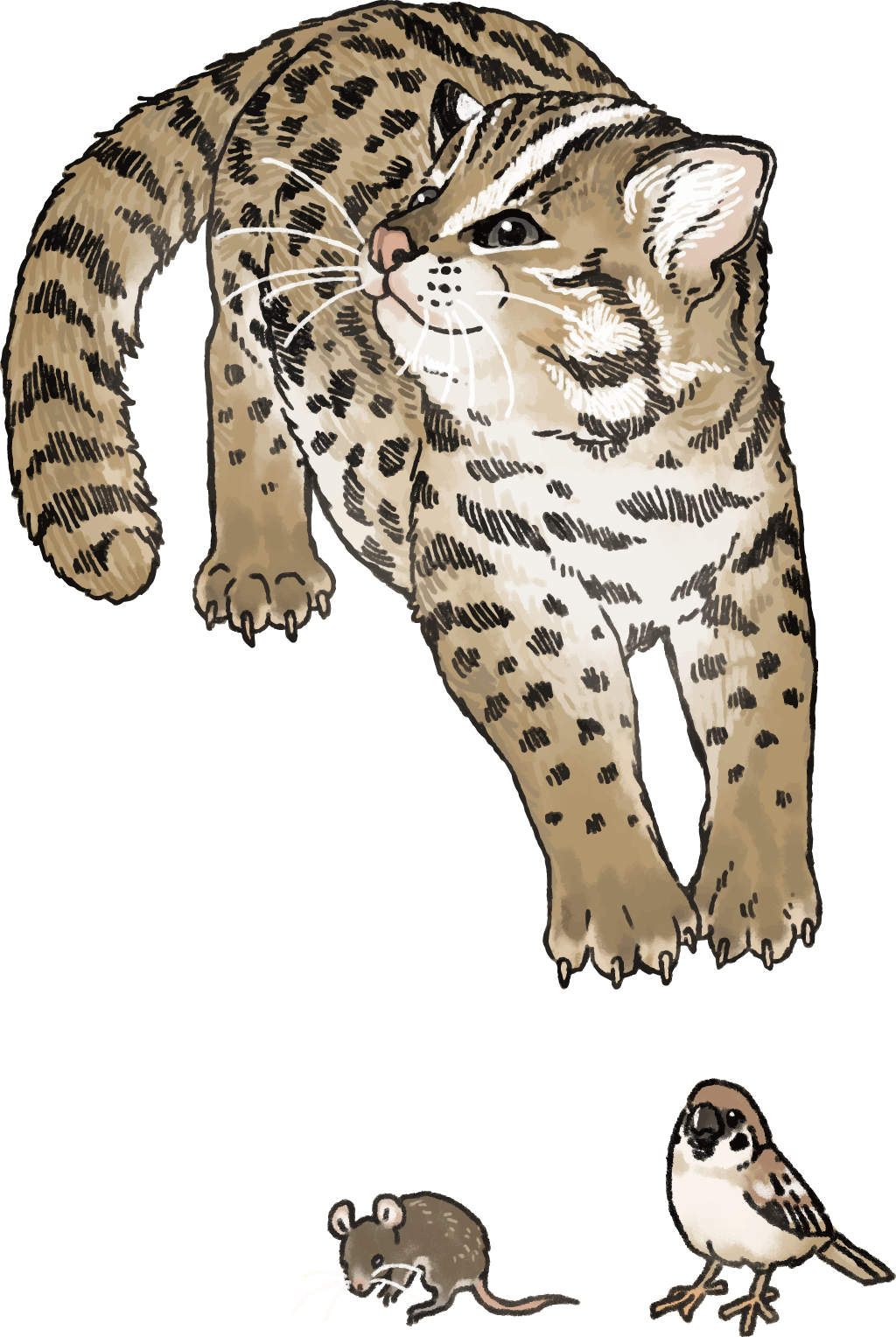
石虎
目前僅存約500隻
曾經遍佈臺灣淺山區域,
是目前臺灣僅存的唯一原生種貓科動物。
曾經遍佈臺灣淺山區域,
是目前臺灣僅存的唯一原生種貓科動物。
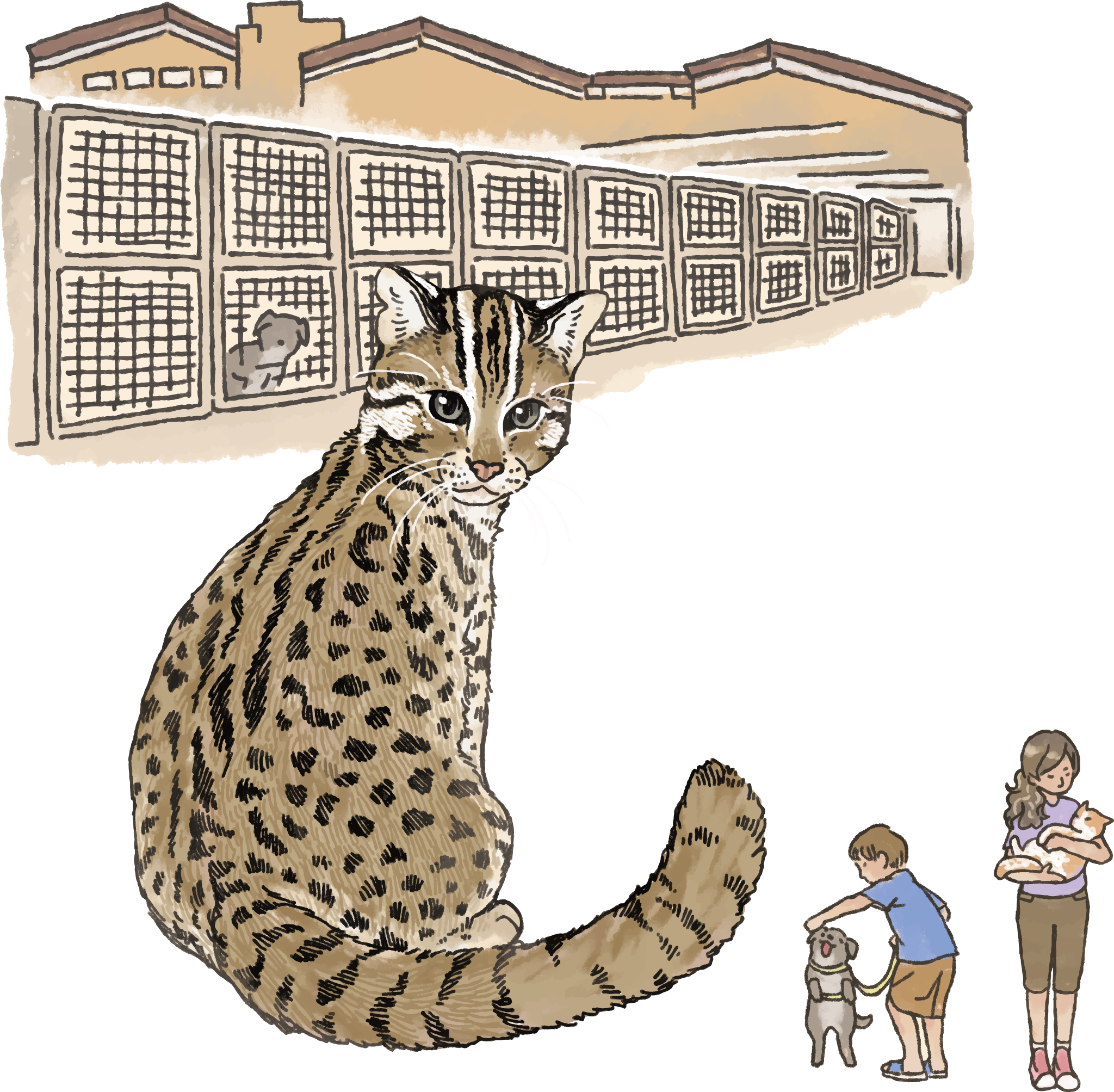
Leopard Cat, the only native feline species remaining in Taiwan, was once widely distributed across the low-elevation areas in Taiwan. There are now approximately 500 individuals left.
石虎 Leopard Cat
(Prionailurus bengalensis euptilurus)
|
特徵
Characteristics
|
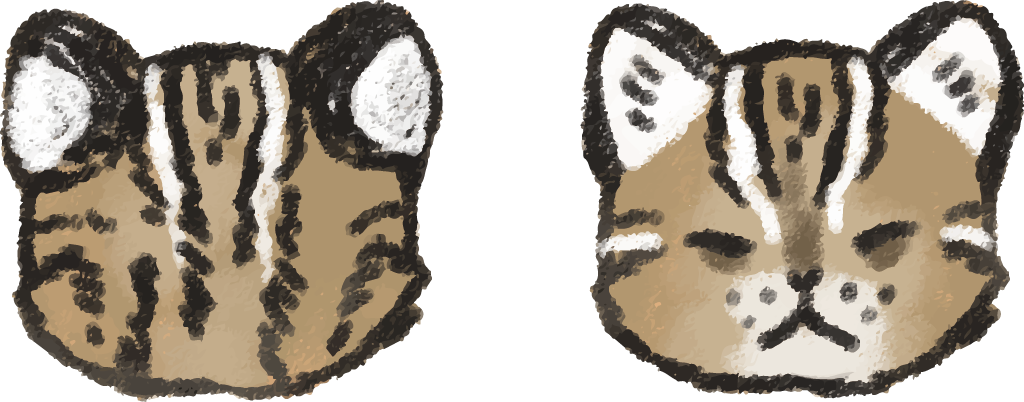
身體佈滿黑色斑點,體型與家貓相當,但跟貓不同的是石虎擁有眼上白線與耳後白斑。
The leopard cat's body is covered with black spots, and its size is similar to domestic cat. The distinguishing feature is that the leopard cat has one white line running from its each eye to the fore head, and white spots behind its ears.
|
|
食性
Diet
|
菜單包含鼠類、小型哺乳類、鳥類、兩棲爬行類、魚類等。
Feeds on rodents and small mammals, as well as birds, amphibians, reptiles, and fish.
|
|
棲地
Habitat
|
目前主要分布在中臺灣淺山林地與草生地鑲嵌的環境。
It is currently mainly distributed in the mosaics of forests, grasslands, agriculture lands, and villages at low-elevation areas in northwest Taiwan.
|
|
習性
Behavior
|
主要為夜行性,並以晨昏為高峰,行蹤隱密。郊山農村同時是人與石虎的家,因此,各種環境問題直接威脅石虎的生存。
Nocturnal with peaks in the morning and evening and hard to detect. Suburban and rural areas are home to both humans and leopard cats. As a result, various environmental issues directly threaten the surviv al of leopard cats.
|
|
體型
Body Size
|
體長55-65公分;尾長27-30公分;體重3-6公斤
Length 55-65 cm; Tail length 27-30 cm; Weight 3-6kg.
|
|
分類
Classification
|
哺乳綱;食肉目;貓科
Mammalia; Carnivora; Felidae
|
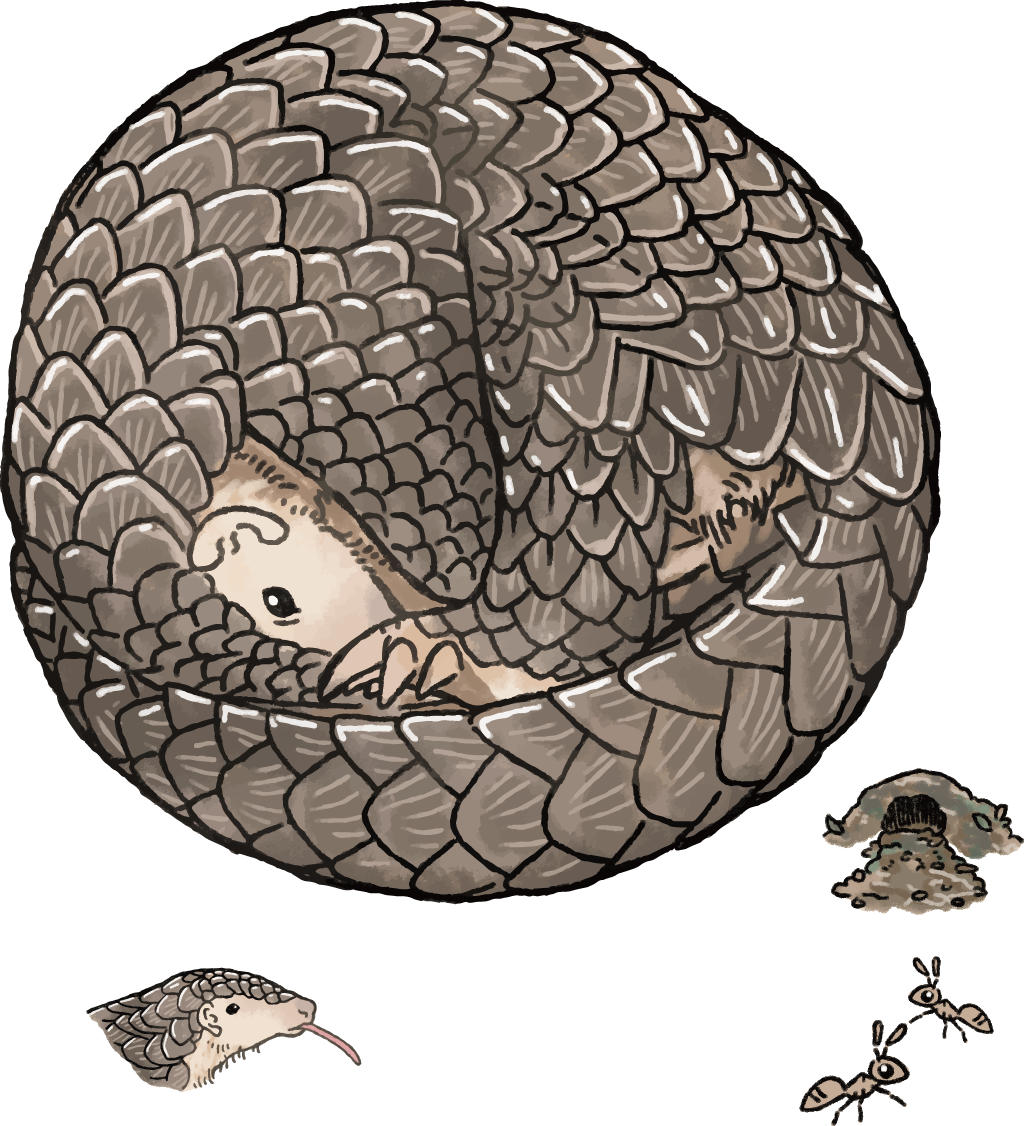
臺灣穿山甲
全球極度瀕危動物
臺灣可說是穿山甲在全世界最重要的守護者,
近年來卻面臨來自遊蕩犬侵擾的高度壓力。
臺灣可說是穿山甲在全世界最重要的守護者,
近年來卻面臨來自遊蕩犬侵擾的高度壓力。
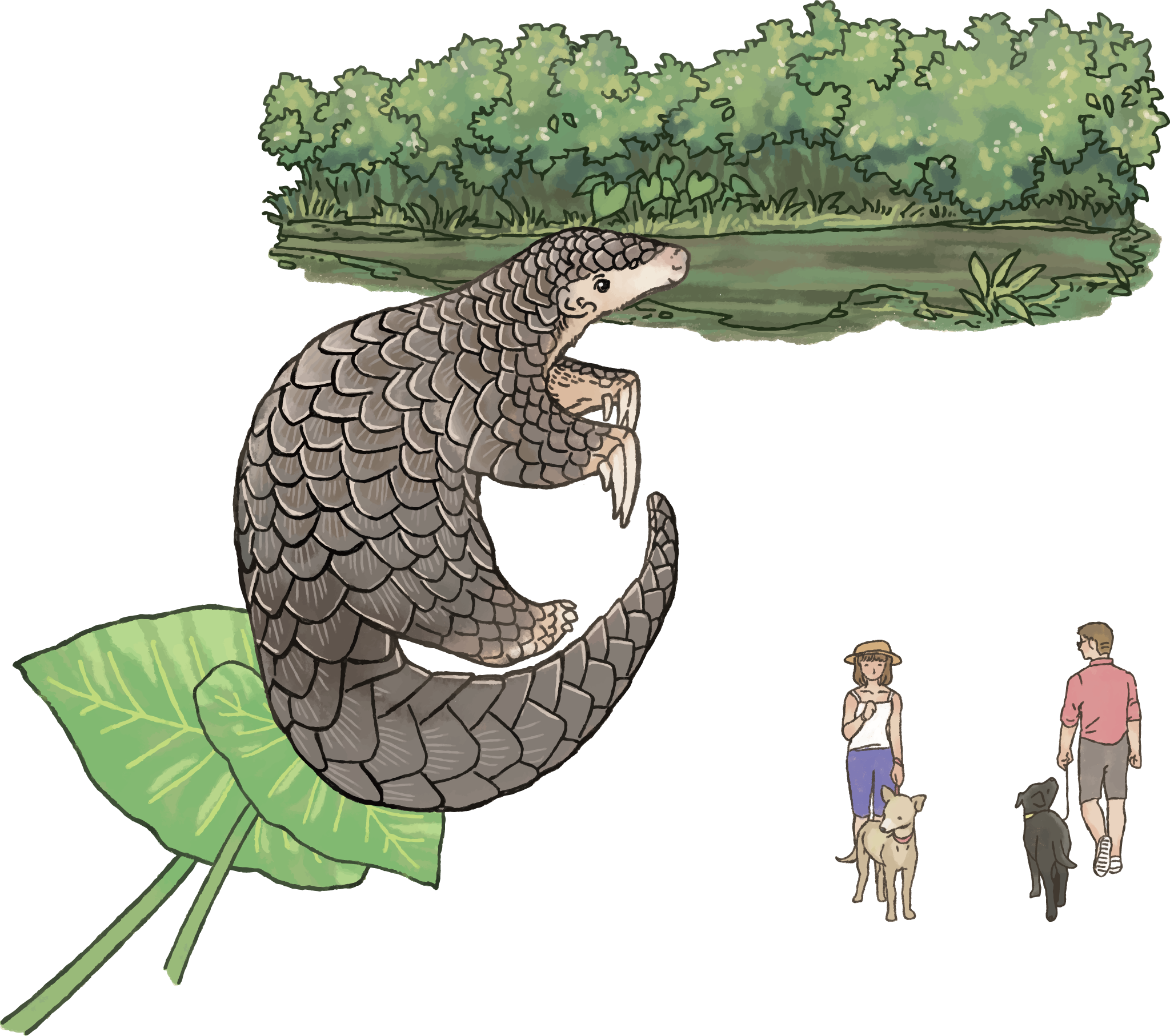
Formosan Pangolin is an extremely endangered species worldwide. Taiwan is one of the most crucial protectors of pangolins globally, but recently, the intrusion of free-roaming dogs has caused significant pressure on conservation efforts.
臺灣穿山甲 Formosan Pangolin
(Manis pentadactyla pentadactyla)
|
俗名
|
鯪鯉、悶仔、土龜、土鱗仔
|
|
特徵
Characteristics
|
擁有圓錐狀的頭部。除了臉部、腹部與四肢內側以外,全身都包覆的灰褐色的鱗甲。
The Formosan pangolin has a conical head, and its entire body is covered with grayish-brown scales except for the face, abdomen, and inner sides of the limbs.
|
|
食性
Diet
|
用又長又黏的舌頭取食螞蟻與白蟻。
Uses its long and sticky tongue to feed on exclusively ants and termites.
|
|
棲地
Habitat
|
住在臺灣本島海拔2000公尺以下的山林,但以低海拔的淺山區域為主。
Lives in forested areas below 2,000 meters in altitude on the island of Taiwan, with a preference for low-elevation rural landscapes.
|
|
習性
Behavior
|
夜行性為主,會以前爪挖掘地洞。遇到危險會蜷縮成球狀,但面對遊蕩動物的利齒,鱗片卻不足以保護自己。
Primarily nocturnal, it digs burrows with its front claws. When threatened, the Formosan pangolin rolls into a ball for defense, but its scales cannot protect it against the sharp teeth of free-roaming dogs.
|
|
體型
Body Size
|
體長40-60公分;尾長30-40公分;體重4-6公斤
Length 40-60 cm; Tail length 30-40cm ; Weight 4-6 kg.
|
|
分類
Classification
|
哺乳綱;鱗甲目;穿山甲科
Mammalia; Pholidota; Manidae.
|
願生命皆能適得其所
請支持野生動物生態熱區
遊蕩犬貓移置計畫
遊蕩犬貓移置計畫
May All Lives Be Where They Belong
Please support the relocation project for free-roaming dogs and cats in wildlife ecological hotspots.
願生命皆能適得其所
流浪動物管理政策必須
以TNSA取代TNR
以TNSA取代TNR
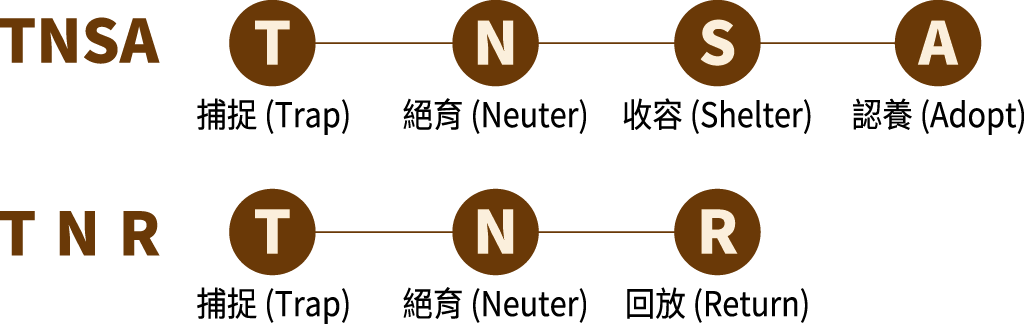
May All Lives Be Where They Belong
Stray animal management policies must replace TNR with TNSA.
願生命皆能適得其所
對伴侶動物不離不棄
對野生動物勿驚勿擾
對野生動物勿驚勿擾
May All Lives Be Where They Belong
Do not abandon your companion animals.
Do not disturb wildlife.
Do not disturb wildlife.